
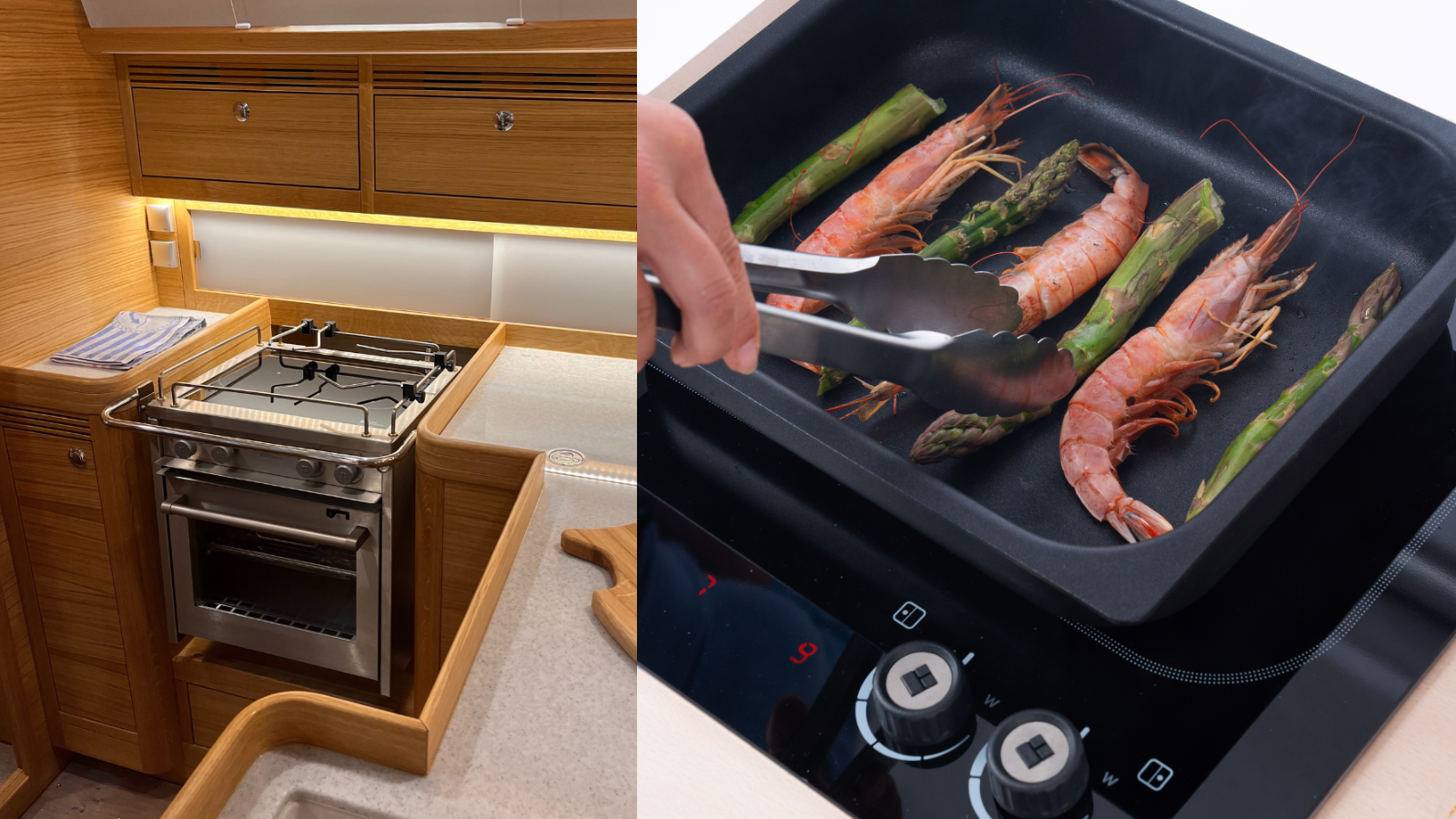
For many sailors and motorhome owners, gas has always just been part of life on board. You manage the bottles, you check the regulators, you live with the faint smell and the moisture it leaves behind - because that's just how it's always been done.
But it doesn't have to be.
More and more adventurers are making the switch to electric cooking, and once they do, very few look back. If you've been curious about whether it's right for you, here's everything you need to know.
Why bother going electric?
The benefits go beyond the environmental case, though that matters too.
Safety. LPG is flammable, and managing gas on a moving boat or vehicle carries real risk. Removing it entirely - the bottles, the pipework, the regulators - eliminates that risk completely. Induction hobs also stay cool to the touch, which makes a meaningful difference when you're cooking in a seaway or on a winding road.
Space. Gas lockers and bottle storage take up valuable room. Once you remove the gas system, that space is yours back.
Convenience. No more running out of gas at anchor in a remote bay or hunting for the right bottle fitting in a foreign country. If you have power, you have cooking.
Performance. Modern induction cooking is faster and more responsive than gas - not a compromise. You can boil, simmer, and sear with precision, and the oven reaches temperature in a fraction of the time.
What do you actually need?
The switch is more straightforward than most people expect. Here's what to think about:
Battery capacity. As a rough guide, you'll want a battery bank of at least 200–400Ah to cook comfortably without relying on a generator. The more renewable charging you have - solar, wind, alternator - the more independent you'll be. Many of our customers cook entirely off solar during summer cruising.
A quality inverter. If you're running off battery rather than shore power, you'll need an inverter to convert DC to the 230V AC your cooker needs. We recommend Victron Energy systems - our cookers are fully compatible and work seamlessly with their range.
A qualified installer. Removing your existing gas system is a job for a qualified marine engineer or auto-electrician. It's straightforward work, but worth doing properly. Your new electric cooker is then hardwired into your 230V circuit - full installation instructions are included with every GN Espace unit.
Is it worth it?
If you have, or are planning, a decent battery and charging setup - yes, absolutely. Our electric cookers use up to 50% less energy than domestic equivalents, so they work harder for every amp you put in. And the cooking results speak for themselves - our customers regularly tell us they're producing meals on board that they'd be proud of at home.
If your electrical system is more modest and you're not planning to upgrade, a quality LPG cooker may still be the right choice for now. We're always happy to talk through your specific setup and give you an honest answer.
Ready to make the switch?
Whether you're refitting a yacht, converting a campervan, or simply replacing an ageing cooker, our team has helped hundreds of customers go gas-free. We'll help you choose the right model for your space and usage, and talk through any questions about your electrical system.
Get in touch with the GN Espace team - the conversation is free, and there's no obligation.
GN Espace — Really Cooking.
.png)
.png)